
Carbon Steel Products Manufacturers, Supplier and Exporter in India
Amardeep Steel is a trusted carbon steel products manufacturer, supplier and exporter in India. We supply all these products, such as pipes & tubes, sheets & plates, bars, fittings,fasteners, and flanges, among other products, to industries.
Carbon steel is an example of an iron-carbon alloy that has a high proportion of carbon content, reaching 2.1 percent of the total weight. Such high carbon content gives carbon steel exceptional tensile strength, and it is therefore a favorite material in all types of construction, be it buildings and bridges or even some of the most common household items, such as fridges and washing machines.
The carbon steel products of Amardeep Steel can be sold globally under ASTM, ASME, and EN requirements. Having a wide variety of carbon steel types, the products are used in heat exchangers, industrial boilers, and pressure vessels, where they are providing high performance in harsh conditions.
Carbon Steel Products List
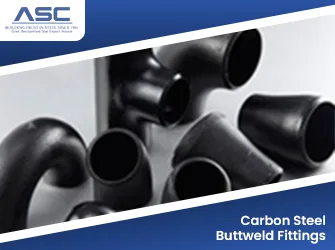
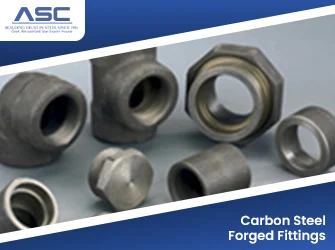
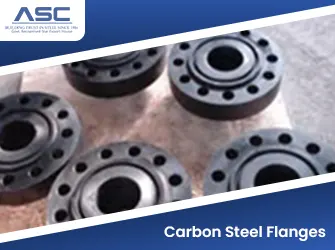
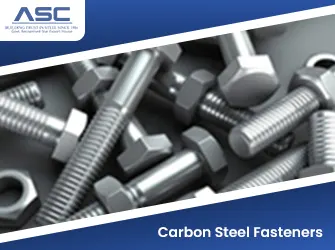
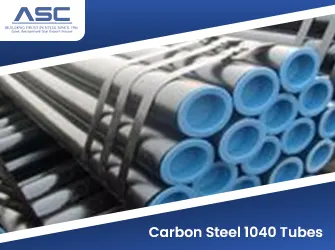
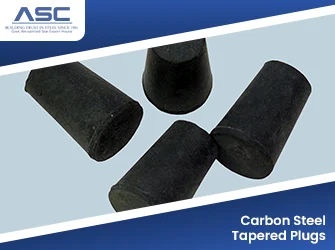

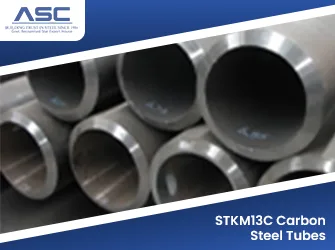
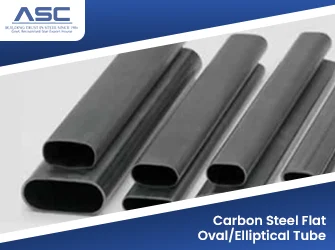
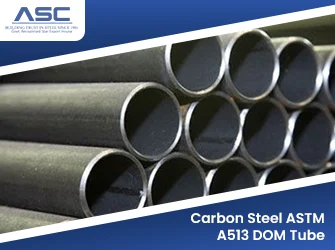
Types of Carbon Steel
Carbon steel is classified into four main types based on its carbon content. The amount of carbon significantly influences the steel's hardness, strength, and ductility.
- Low Carbon Steel (or Mild Steel): This is the most common type. It is highly ductile, formable, and easy to weld, making it ideal for a wide range of everyday items.
- Medium Carbon Steel: Offering a good balance of strength and ductility, it is often heat-treated to improve its mechanical properties.
- High Carbon Steel: This type is very strong and hard but lacks ductility, making it suitable for high-wear applications.
- Ultra-High Carbon Steel: Containing the highest carbon content, this steel is exceptionally hard but also quite brittle.
Specifications of Carbon Steel Products
|
Parameter |
Specification Details |
|---|---|
|
Applicable Standards |
ASTM, ASME, DIN, JIS, BS, EN |
|
Material Grades |
Mild (Low Carbon) Steel, Medium Carbon Steel, High Carbon Steel, Ultra-High Carbon Steel, ASTM A36, UNS G10180 (1018), UNS G10450 (1045), UNS G10950 (1095) |
|
Available Forms |
Carbon Steel Pipes, Pipe Fittings, Valves, Round Bars, Expansion Bellows, Flanges |
Carbon Steel Chemical Composition
Understanding the chemical composition of carbon steel products is crucial for selecting the right material for your needs. Carbon steel is an alloy of iron and carbon, with small amounts of other elements like manganese, sulfur, phosphorus, and sil added to enhance its properties.
Low Carbon Steel Chemical Composition
Low carbon steel is easy to shape and weld, making it a common choice for general construction.
| Grade | UNS Number | C (max) | Mn (max) | S (max) | P (max) |
|---|---|---|---|---|---|
| 1010 | G10100 | .08-.13% | .30-.60% | 0.05% | 0.04% |
| 1018 | G10180 | .14-.20% | .60-.90% | 0.05% | 0.04% |
| 1020 | G10200 | .17-.23% | .30-.60% | 0.05% | 0.04% |
Medium Carbon Steel Chemical Composition
Medium carbon steel is stronger and harder than low carbon steel, often used for forging and heavy-duty applications.
| Grade | UNS Number | C (max) | Mn (max) | S (max) | P (max) |
|---|---|---|---|---|---|
| 1045 | G10450 | 0.43-0.50% | 0.60-0.90% | 0.05% | 0.04% |
| 1060 | G10600 | 0.55-0.65% | 0.60-0.90% | 0.05% | 0.04% |
High Carbon Steel Chemical Composition
High carbon steel is very hard and strong, with great wear resistance. It's a top choice for tools, blades, and parts that require high strength.
| Grade | UNS Number | C (max) | Mn (max) | S (max) | P (max) |
|---|---|---|---|---|---|
| 1080 | G10800 | 0.75–0.88% | 0.60–0.90% | 0.05% | 0.04% |
| 1095 | G10950 | 0.90–1.03% | 0.30–0.50% | 0.05% | 0.04% |
Mechanical Properties of Carbon Steel
The properties of a carbon steel material depend directly on its carbon content. As the percentage of carbon increases, so does its hardness and strength, while its ductility generally decreases.
| Alloy Type | AISI Grade | Carbon Content | Yield Strength (MPa) | Tensile Strength (MPa) | Ductility (% elongation) |
|---|---|---|---|---|---|
| Low | 1010 | 0.10% | 180 | 325 | 28 |
| Low | 1020 | 0.20% | 205 | 380 | 25 |
| Low | A36 | 0.29% | 220 | 400 | 23 |
| Medium | 1040 | 0.37–0.44% | 415 | 620 | 25 |
| High | 1080 | 0.75–0.88% | 440 | 924 | 12 |
| High | 1095 | 0.90–1.04% | 380 | 665 | 10 |
Thermal Characteristics of Carbon Steel Products
Thermal performance plays a key role in selecting carbon steel products for high-temperature and pressure-based applications. Typical thermal values are listed below.
|
Thermal Property |
Metric Units |
Imperial Units |
|---|---|---|
|
Linear Thermal Expansion |
9.90 – 14.8 µm/m-°C |
5.50 – 8.22 µin/in-°F |
|
Specific Heat |
0.410 – 0.669 J/g-°C |
0.098 – 0.160 BTU/lb-°F |
|
Thermal Conductivity |
19.0 – 52.0 W/m-K |
132 – 361 BTU-in/hr-ft²-°F |
|
Max Operating Temperature (Air) |
120 – 482 °C |
248 – 900 °F |
|
Phase Transformation Range |
183 – 910 °C |
361 – 1670 °F |
Physical Properties of Carbon Steel Products
|
Property |
Metric Values |
Imperial Values |
|---|---|---|
|
Density |
7.75 – 7.89 g/cc |
0.280 – 0.285 lb/in³ |
|
Particle Size |
6.70 – 12.0 µm |
6.70 – 12.0 µm |
|
Reduction of Area |
20 – 71.4 % |
20 – 71.4 % |
|
Elastic Modulus |
187 – 213 GPa |
27,100 – 30,900 ksi |
|
Bulk Modulus |
152 – 163 GPa |
22,000 – 23,600 ksi |
|
Poisson’s Ratio |
0.28 – 0.30 |
0.28 – 0.30 |
|
Fatigue Strength |
138 – 614 MPa |
20,000 – 89,100 psi |
|
Fracture Toughness |
80.9 – 143 MPa√m |
73.7 – 130 ksi√in |
|
Machinability |
40 – 80 % |
40 – 80 % |
|
Shear Modulus |
72 – 82 GPa |
10,400 – 11,900 ksi |
|
Izod Impact |
9 – 135 J |
6.64 – 99.6 ft-lb |
|
Charpy Impact |
10.8 – 65 J |
8.0 – 47.9 ft-lb |
Common Carbon Steel Grades & Applications
High carbon steel is very hard and strong, with great wear resistance. It's a top choice for tools, blades, and parts that require high strength.
|
Grade |
Standard |
Typical Application |
|---|---|---|
|
A36 |
ASTM A36 |
Structural frameworks and construction |
|
A572 Grade 50 |
ASTM A572 |
High-strength structural components |
|
A514 |
ASTM A514 |
Quenched and tempered high-strength steel |
|
A516 |
ASTM A516 |
Pressure vessels and boilers |
|
A106 |
ASTM A106 |
Seamless pipes for high-temperature service |
|
A53 |
ASTM A53 |
Welded and seamless carbon steel piping |
|
A500 |
ASTM A500 |
Structural tubing |
|
A105 |
ASTM A105 |
Forged components for piping systems |
|
1018 |
ASTM A108 |
Cold-drawn general engineering steel |
|
1045 |
ASTM A108 |
Medium-carbon steel for shafts and gears |
Frequently Asked Questions
1. What is the main difference between carbon steel and stainless steel?
The main difference is the presence of chromium. Stainless steel contains a high percentage of chromium (10.5% or more), which creates a passive layer to resist rust. Carbon steel lacks this high chromium content, making it susceptible to corrosion but also more affordable.
2. Is carbon steel magnetic?
Yes, almost all types of carbon steel are highly magnetic due to their high iron content.
3. Can carbon steel rust?
Yes, carbon steel will rust when exposed to moisture and oxygen. To prevent rust, it must be coated or painted.
