ASME B16.5 Socket Weld Raised Face Flanges Manufacturer, Supplier & Exporter in India | ISO 9001:2015 Certified
Amardeep Steel Centre manufactures ASME / ANSI B16.5 Socket Weld Raised Face Flanges from our ISO 9001:2015 certified facility in India. Since 2008, we have supplied socket weld flanges to refineries, petrochemical plants, and offshore platforms across 35+ countries including UAE, Saudi Arabia, USA, UK, and Singapore. Our manufacturing range covers stainless steel (ASTM A182 F304/F316L), carbon steel (ASTM A105), alloy steel (F5/F9/F11/F22), duplex/super duplex (F51/F53/F55), and nickel alloys (Monel, Inconel, Hastelloy) in pressure classes 150 to 2500.
Socket Weld Raised Face Flanges are specially designed for small bore high-pressure piping systems where leakage prevention and structural strength are critical. The raised face design improves gasket sealing efficiency and provides reliable leak-tight connections. Our ASME B16.5 Socket Weld RF Flanges are supplied in pressure classes 150, 300, 400, 600, 900, 1500, and 2500 with sizes ranging from 1/2" NB to 24" NB.
Need Socket Weld RF Flanges Urgently?
Request Technical Datasheet & Price Quote
ISO 9001:2015 Certified Manufacturing | Ex-Stock Availability for Standard Sizes | 24-Hour Technical Response Time | Material Test Certificates with Every Order
Table of Contents
- Socket Weld Raised Face Flanges Manufacturer
- What is a Socket Weld Raised Face Flange?
- Technical Features
- Specifications
- Materials Available
- Comparison Guide
- Dimensions
- Facing Types
- Pressure Classes
- Advantages
- Installation Guidelines
- Applications
- Manufacturing & Quality Testing
- Frequently Asked Questions
- Request a Quote
What is a Socket Weld Raised Face Flange (SWRF)?
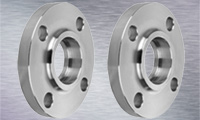
A Socket Weld Raised Face Flange is a type of forged flange designed for high-pressure piping systems with smaller pipe diameters. The pipe is inserted into the socket end of the flange, leaving a small expansion gap, and then welded externally using a fillet weld.
The raised face portion concentrates sealing pressure on the gasket area, enhancing sealing performance under high pressure and high-temperature applications.
The socket depth typically ranges from 22mm to 117mm depending on pipe size, with a standard expansion gap of 1.6mm (1/16 inch) left between the pipe end and socket bottom. This gap allows for thermal expansion during welding and prevents weld root pass issues. The fillet weld, applied externally on the hub-to-pipe junction, creates a smooth transition that minimizes turbulence and erosion in high-velocity fluid systems. Socket weld flanges comply with ASME B16.11 socket welding dimensions and ASME B1.20.1 threading standards.
Socket Weld Flanges Are Preferred Where:
- High-pressure service conditions exist (up to Class 2500 / PN 420)
- Pipe leakage must be minimized for hazardous, toxic, or high-value fluid handling
- Small pipe bore systems (1/2" to 4" NB) are used
- Strong and reliable joints are required with fatigue resistance
- Smooth internal flow and reduced turbulence are necessary
- ASME B16.5 dimensions, tolerances, pressure-temperature ratings, and material specifications are required
Technical Features of ANSI B16.5 Socket Weld RF Flanges
- Sealing performance tested to 150+ bar (2,175 psi) under ASME Section VIII Division 1 conditions
- Mechanical strength rated to ASTM A370 tensile requirements, with minimum 485 MPa yield strength for carbon steel grades
- Fatigue resistance exceeding 106 cycles at rated working pressure per ASME B16.5 Appendix E testing
- Single fillet weld construction reduces installation time by up to 40% compared to slip-on double-welded flanges
- Suitable for high-pressure service up to Class 2500 (PN 420) with appropriate material grade selection
- Bore alignment accuracy within +/-0.5mm maintained through CNC machining per ASME B16.5 tolerances
- Reduced turbulence and erosion from smooth bore and optimized flow path geometry
- Available in Raised Face (RF) and Ring Type Joint (RTJ) facing configurations
- Corrosion-resistant material grades available for aggressive chemical and marine environments
- ASTM A182 forged grade with PMI-tested material compliance for every batch
ASME B16.5 Socket Weld Raised Face Flanges Specifications
| Parameter | Details |
|---|---|
| Standard | ASME / ANSI B16.5 |
| Flange Type | Socket Weld Raised Face (SWRF) |
| Size Range | 1/2" NB to 24" NB |
| Pressure Class | 150, 300, 400, 600, 900, 1500, 2500 |
| Facing Type | Raised Face (RF), Ring Type Joint (RTJ) |
| Material Grades | Stainless Steel, Carbon Steel, Alloy Steel, Duplex, Super Duplex, Nickel Alloys, Titanium |
| Manufacturing Method | Forged & CNC Machined |
| Surface Finish | Anti-rust oil, black paint, galvanizing, epoxy coating |
| Inspection | PMI, Hydrostatic Test, UT, Radiography, Third Party Inspection |
| MTC Standard | EN 10204 3.1 / 3.2 on request |
| Origin | India |
All socket weld raised face flanges are manufactured per ASME B16.5 dimensional standards with material composition verified through optical emission spectroscopy (OES) and X-ray fluorescence (XRF) testing. Each flange batch undergoes hydrostatic pressure testing at 1.5× rated working pressure, ultrasonic thickness measurement, and hardness verification per ASTM E18 Rockwell testing.
Materials Available for Socket Weld Flanges
| Category | Grade / Specification |
|---|---|
| Stainless Steel Socket Weld RF Flanges | ASTM A182 F304 / F304L / F316 / F316L / F321 / F347 |
| Carbon Steel Socket Weld RF Flanges | ASTM A105 | ASTM A350 LF2 | ASTM A694 F52/F60/F65/F70 |
| Alloy Steel Socket Weld RF Flanges | ASTM A182 F5 / F9 / F11 / F22 / F91 |
| Duplex & Super Duplex Socket Weld RF Flanges | ASTM A182 F51 / F53 / F55 |
| Nickel Alloy Socket Weld RF Flanges | Monel 400 | Inconel 600/625/800/825 | Hastelloy C276 | Alloy 20 |
| Titanium Socket Weld RF Flanges | Titanium Grade 2, Grade 5 |
Material selection depends on operating temperature, pressure, fluid corrosivity, and industry-specific requirements. Each grade is supplied with Material Test Certificates (MTC) per EN 10204 3.1 or 3.2. Contact our technical team for material compatibility guidance.
Socket Weld vs Slip-On vs Weld Neck Flange — Comparison Guide
Choosing the right flange type depends on your application's pressure requirements, pipe size, installation constraints, and budget. The table below provides a direct comparison to support your selection:
| Feature | Socket Weld Flange | Slip-On Flange | Weld Neck Flange |
|---|---|---|---|
| Welding Required | Single fillet weld | Double weld (inside + outside) | Single butt weld |
| Pressure Rating | Up to Class 2500 | Up to Class 600 | Up to Class 2500 |
| Best For Pipe Size | 1/2" to 4" NB | 1" to 24" NB | 1/2" to 60" NB |
| Installation Time | Fast (15-20 min) | Moderate (25-35 min) | Fast (15-20 min) |
| Leak Risk | Very Low | Low to Moderate | Very Low |
| Relative Cost | $$ | $ | $$$ |
| Ideal Applications | High-pressure small bore | Low-pressure general service | Critical high-stress lines |
| ASME Standard | B16.5, B16.11 | B16.5 | B16.5 |
When to Choose Socket Weld Flanges:
- Pipe sizes 4" NB and below requiring high-pressure ratings (Class 600 to 2500)
- Systems where leakage must be minimized for hazardous fluids, toxic gases, or high-value media
- Installation spaces where double-sided welding access is limited
- Projects requiring faster installation than slip-on but lower cost than weld neck
- Applications where single-pass fillet welding reduces labour cost and inspection scope
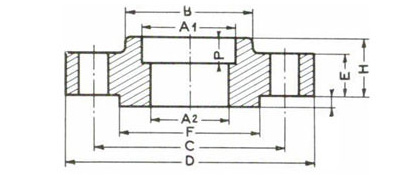
ASME / ANSI B16.5 Socket Weld Raised Face Flange Dimensions (All dimensions in mm)
Class 150 — Socket Weld Raised Face Flange Dimensions
| NPS | OD (O) | Thick (tf) | Hub Dia (X) | RF (f) | LTH (Y) | Bore (B) | Socket Bore (D) | Socket Depth (E) | Bolt Circle (K) | Bolt Holes | Bolt Size |
|---|---|---|---|---|---|---|---|---|---|---|---|
| 1/2" | 90 | 11.2 | 30.2 | 2 | 22 | 15.7 | 22.4 | 22 | 60.5 | 4 | 15.7 |
| 3/4" | 100 | 12.7 | 38.1 | 2 | 25 | 20.9 | 27.7 | 25 | 69.9 | 4 | 15.7 |
| 1" | 108 | 14.2 | 49.3 | 2 | 27 | 26.6 | 34.5 | 25 | 79.2 | 4 | 15.7 |
| 1-1/4" | 117 | 15.7 | 58.7 | 2 | 32 | 35.1 | 43.2 | 29 | 88.9 | 4 | 15.7 |
| 1-1/2" | 127 | 17.5 | 65.0 | 2 | 35 | 40.9 | 49.0 | 32 | 98.6 | 4 | 15.7 |
| 2" | 152 | 19.1 | 77.7 | 2 | 38 | 52.5 | 61.1 | 38 | 120.7 | 4 | 19.1 |
| 2-1/2" | 178 | 22.4 | 90.4 | 2 | 41 | 62.7 | 73.7 | 41 | 139.7 | 4 | 19.1 |
| 3" | 191 | 24.0 | 108.0 | 2 | 44 | 78.0 | 89.0 | 44 | 152.4 | 4 | 19.1 |
| 4" | 229 | 24.0 | 134.9 | 2 | 51 | 102.3 | 115.8 | 51 | 190.5 | 8 | 19.1 |
| 5" | 254 | 24.0 | 163.6 | 2 | 57 | 128.2 | 141.2 | 54 | 215.9 | 8 | 22.4 |
| 6" | 279 | 25.4 | 192.0 | 2 | 64 | 154.1 | 167.1 | 60 | 241.3 | 8 | 22.4 |
| 8" | 343 | 28.4 | 246.1 | 2 | 76 | 202.7 | 220.4 | 70 | 298.5 | 8 | 22.4 |
| 10" | 406 | 30.2 | 304.8 | 2 | 83 | 254.5 | 272.2 | 79 | 362.0 | 12 | 25.4 |
| 12" | 483 | 31.8 | 365.3 | 2 | 89 | 304.8 | 323.9 | 86 | 431.8 | 12 | 25.4 |
| 14" | 533 | 35.1 | 400.1 | 2 | 92 | 336.6 | 355.6 | 89 | 476.3 | 12 | 28.4 |
| 16" | 597 | 36.6 | 457.2 | 2 | 95 | 387.4 | 406.4 | 92 | 539.8 | 16 | 28.4 |
| 18" | 635 | 39.6 | 505.0 | 2 | 102 | 438.2 | 457.2 | 98 | 577.9 | 16 | 31.8 |
| 20" | 699 | 42.9 | 558.8 | 2 | 108 | 489.0 | 508.0 | 105 | 635.0 | 20 | 31.8 |
| 24" | 813 | 47.8 | 663.4 | 2 | 121 | 590.6 | 609.6 | 117 | 749.3 | 20 | 35.1 |
Class 300 — Socket Weld Raised Face Flange Dimensions
| NPS | OD | Thick | Hub Dia | RF | LTH | Bore | Socket Bore | Socket Depth | Bolt Circle | Bolt Holes | Bolt Size |
|---|---|---|---|---|---|---|---|---|---|---|---|
| 1/2" | 95 | 14.2 | 38.1 | 2 | 22 | 15.7 | 22.4 | 22 | 66.5 | 4 | 15.7 |
| 3/4" | 117 | 15.7 | 47.8 | 2 | 25 | 20.9 | 27.7 | 25 | 82.6 | 4 | 19.1 |
| 1" | 124 | 17.5 | 53.8 | 2 | 27 | 26.6 | 34.5 | 25 | 88.9 | 4 | 19.1 |
| 1-1/4" | 133 | 19.1 | 63.5 | 2 | 32 | 35.1 | 43.2 | 29 | 98.6 | 4 | 19.1 |
| 1-1/2" | 156 | 20.6 | 69.9 | 2 | 35 | 40.9 | 49.0 | 32 | 114.3 | 4 | 22.4 |
| 2" | 165 | 22.4 | 84.1 | 2 | 38 | 52.5 | 61.1 | 38 | 127.0 | 8 | 19.1 |
| 2-1/2" | 191 | 25.4 | 100.1 | 2 | 41 | 62.7 | 73.7 | 41 | 149.4 | 8 | 22.4 |
| 3" | 210 | 28.4 | 117.3 | 2 | 44 | 78.0 | 89.0 | 44 | 168.1 | 8 | 22.4 |
| 4" | 254 | 31.8 | 146.1 | 2 | 51 | 102.3 | 115.8 | 51 | 200.2 | 8 | 22.4 |
| 5" | 279 | 35.1 | 177.8 | 2 | 57 | 128.2 | 141.2 | 54 | 235.0 | 8 | 22.4 |
| 6" | 318 | 36.6 | 206.2 | 2 | 64 | 154.1 | 167.1 | 60 | 269.7 | 12 | 22.4 |
| 8" | 381 | 41.1 | 260.4 | 2 | 76 | 202.7 | 220.4 | 70 | 330.2 | 12 | 25.4 |
| 10" | 445 | 47.8 | 320.5 | 2 | 83 | 254.5 | 272.2 | 79 | 387.4 | 16 | 28.4 |
| 12" | 521 | 50.8 | 381.0 | 2 | 89 | 304.8 | 323.9 | 86 | 450.9 | 16 | 31.8 |
| 14" | 584 | 53.8 | 412.8 | 2 | 92 | 336.6 | 355.6 | 89 | 514.4 | 20 | 31.8 |
| 16" | 648 | 57.2 | 469.9 | 2 | 95 | 387.4 | 406.4 | 92 | 571.5 | 20 | 35.1 |
| 18" | 711 | 60.5 | 533.4 | 2 | 102 | 438.2 | 457.2 | 98 | 628.7 | 24 | 35.1 |
| 20" | 775 | 63.5 | 584.2 | 2 | 108 | 489.0 | 508.0 | 105 | 685.8 | 24 | 35.1 |
| 24" | 914 | 69.9 | 692.2 | 2 | 121 | 590.6 | 609.6 | 117 | 812.8 | 24 | 41.1 |
Class 600 — Socket Weld Raised Face Flange Dimensions
| NPS | OD | Thick | Hub Dia | RF | LTH | Bore | Socket Bore | Socket Depth | Bolt Circle | Bolt Holes | Bolt Size |
|---|---|---|---|---|---|---|---|---|---|---|---|
| 1/2" | 95 | 17.5 | 38.1 | 7 | 22 | 15.7 | 22.4 | 22 | 66.5 | 4 | 15.7 |
| 3/4" | 117 | 19.1 | 47.8 | 7 | 25 | 20.9 | 27.7 | 25 | 82.6 | 4 | 19.1 |
| 1" | 124 | 20.6 | 53.8 | 7 | 27 | 26.6 | 34.5 | 25 | 88.9 | 4 | 19.1 |
| 1-1/4" | 133 | 22.4 | 63.5 | 7 | 32 | 35.1 | 43.2 | 29 | 98.6 | 4 | 19.1 |
| 1-1/2" | 156 | 25.4 | 69.9 | 7 | 35 | 40.9 | 49.0 | 32 | 114.3 | 4 | 22.4 |
| 2" | 165 | 28.4 | 84.1 | 7 | 38 | 52.5 | 61.1 | 38 | 127.0 | 8 | 19.1 |
| 2-1/2" | 191 | 31.8 | 100.1 | 7 | 41 | 62.7 | 73.7 | 41 | 149.4 | 8 | 22.4 |
| 3" | 210 | 35.1 | 117.3 | 7 | 44 | 78.0 | 89.0 | 44 | 168.1 | 8 | 22.4 |
| 4" | 273 | 38.1 | 146.1 | 7 | 51 | 102.3 | 115.8 | 51 | 215.9 | 8 | 25.4 |
| 5" | 330 | 44.5 | 177.8 | 7 | 57 | 128.2 | 141.2 | 54 | 266.7 | 8 | 28.4 |
| 6" | 356 | 47.8 | 206.2 | 7 | 64 | 154.1 | 167.1 | 60 | 292.1 | 12 | 25.4 |
| 8" | 419 | 55.6 | 260.4 | 7 | 76 | 202.7 | 220.4 | 70 | 349.3 | 12 | 31.8 |
| 10" | 508 | 63.5 | 320.5 | 7 | 83 | 254.5 | 272.2 | 79 | 431.8 | 16 | 35.1 |
| 12" | 559 | 66.5 | 381.0 | 7 | 89 | 304.8 | 323.9 | 86 | 489.0 | 20 | 35.1 |
Socket Weld Flange — Bolt Dimensions
| Nominal Pipe Size | Bolt Diameter | Stud Length |
|---|---|---|
| 1/2" | M14 | 55 mm |
| 3/4" | M14 | 65 mm |
| 1" | M16 | 75 mm |
| 1-1/2" | M16 | 90 mm |
| 2" | M16 | 100 mm |
| 3" | M20 | 120 mm |
| 4" | M20 | 140 mm |
| 6" | M22 | 180 mm |
| 8" | M24 | 220 mm |
| 10" | M27 | 260 mm |
| 12" | M30 | 300 mm |
Socket Weld Flanges Facing Types
Raised Face (RF)
Raised Face flanges have a small raised portion around the bore that concentrates gasket compression and improves sealing performance. RF facing is suitable for pressure classes up to 1500 and is used with spiral wound, graphite, or PTFE gaskets. It is the most common facing type in process piping.
Ring Type Joint (RTJ)
RTJ flanges contain precision-machined grooves (oval or octagonal cross-section) that accommodate metallic ring gaskets. RTJ facing provides superior sealing under extreme pressure and temperature conditions, making it the preferred choice for Class 2500 and safety-critical applications such as wellhead equipment and high-pressure steam systems.
Pressure Classes Available
| Pressure Class | PN Equivalent | Typical Application |
|---|---|---|
| Class 150 | PN 20 | Low to moderate pressure applications; general industrial piping |
| Class 300 | PN 50 | Medium-pressure industrial piping; utilities and process services |
| Class 600 | PN 110 | Higher pressure and elevated temperature applications |
| Class 900 | PN 150 | Refinery and petrochemical sectors; FCC, hydrocracking units |
| Class 1500 | PN 260 | Critical process services; LNG, ammonia, high-pressure steam |
| Class 2500 | PN 420 | Extremely high-pressure and safety-critical process services |
Advantages of Socket Weld Raised Face Flanges
- High structural strength from forged construction per ASME B16.5 with traceable heat numbers
- Reliable leak-proof sealing because the raised face concentrates gasket load for superior compression
- Excellent pressure handling capability, rated to Class 2500 (PN 420) with appropriate grade
- Reduced risk of turbulence because the smooth bore minimizes erosion and pressure drop
- Better fatigue strength than threaded connections because the fillet weld provides a continuous joint
- Compact and durable design for space-constrained installations
- Suitable for hazardous fluid handling where low leakage risk is critical
- Long service life with corrosion-resistant alloy grades available for aggressive service conditions
- Easy alignment and installation because the socket guides the pipe squarely without complex fit-up
Difference Between Socket Weld Flange and Slip-On Flange
| Feature | Socket Weld Flange | Slip On Flange |
|---|---|---|
| Welding | Single fillet weld | Double welding (inside & outside) |
| Pressure Capability | Up to Class 2500 | Up to Class 600 |
| Pipe Insertion | Into socket | Over flange bore |
| Leakage Risk | Very Low | Low to Moderate |
| Installation Time | Faster (single weld pass) | Slower (two weld passes required) |
| Cost | Higher | Lower |
| Application | High-pressure small bore systems | Low to medium pressure systems |
| Bore Alignment | Better (socket guides pipe) | Standard |
Socket Weld Flange — Installation & Welding Guidelines
Correct installation of socket weld flanges is critical to joint integrity and pressure rating. Follow these guidelines per ASME B31.3 Process Piping and AWS D1.1 welding standards:
| Step | Installation Procedure |
|---|---|
| 1. Pipe Preparation | Cut pipe square and deburr the bore end. Remove mill scale, rust, oil, and contamination to bare metal within 25mm of the weld zone. |
| 2. Expansion Gap | Insert pipe fully into socket, then withdraw approximately 1.6mm (1/16"). Verify gap with feeler gauge before tack welding. |
| 3. Alignment | Verify angular alignment of flange face. Maximum allowable flange misalignment is 1mm in 200mm (0.5 degree). |
| 4. Tack Welding | Apply minimum 3 equally spaced tack welds before final welding. Verify gap is maintained after tacking. |
| 5. Fillet Weld | Apply continuous fillet weld to full circumference. Weld size should equal pipe wall thickness but not less than 6mm. |
| 6. Post-Weld | Allow controlled cool-down. Perform visual inspection, then MT/PT/UT per applicable piping class requirements. |
Note: All welding must be performed by qualified welders per ASME Section IX procedure qualifications. Welding consumables must match base metal specification.
Applications of ASME B16.5 Socket Weld Raised Face Flanges
- Oil & Gas Refineries: FCC units, hydrocracking, distillation columns, pump suction/discharge connections
- Petrochemical Plants: Ethylene, propylene, aromatics production lines for small bore high-pressure service
- Offshore Platforms: Subsea wellhead systems and topside process piping where leak prevention is mandatory
- LNG & Natural Gas: Liquefaction and regasification terminals, metering stations, compressor stations
- Power Generation: High-pressure steam lines, boiler feed water systems, turbine bypass lines
- Chemical Processing: Ammonia, urea, methanol, chlor-alkali plants for hazardous and corrosive media
- Pharmaceutical: Sanitary process piping, CIP/SIP systems, sterile fluid handling
- Water Treatment: High-pressure reverse osmosis skids, desalination plants, pump discharge headers
- Shipbuilding & Marine: Engine room piping, ballast systems, offshore support vessel process lines
- Hydraulic Systems: High-pressure hydraulic circuits requiring vibration-resistant, leak-proof connections
Manufacturing Process & Quality Testing
All socket weld raised face flanges are manufactured using closed-die forging and multi-axis CNC machining technologies. Forged construction ensures uniform grain structure, superior mechanical properties, and pressure integrity compared to cast alternatives. Each flange undergoes the following quality inspections:
| Test / Inspection | Standard / Method |
|---|---|
| Positive Material Identification (PMI) | ASTM E1476 / OES & XRF spectroscopy |
| Hydrostatic Testing | 1.5× rated working pressure per ASME B16.5 |
| Ultrasonic Testing (UT) | ASTM A388 / ASME Section V Article 4 |
| Radiography Testing (RT) | ASME Section V Article 2 |
| Hardness Testing | ASTM E18 Rockwell / Brinell HB |
| Chemical Analysis | Optical Emission Spectroscopy (OES) |
| Mechanical Testing | Tensile & yield per ASTM A370 |
| Third Party Inspection | Bureau Veritas / SGS / TUV / Lloyds Register |
Frequently Asked Questions - Socket Weld Raised Face Flanges (SWRF)
What is the purpose of a socket weld raised face flange?
Socket weld raised face flanges are designed for high-pressure piping systems in small bore applications (typically ½" to 4" NB). The socket design allows the pipe to be inserted into the flange hub with a small expansion gap, then welded externally with a single fillet weld. The raised face concentrates gasket compression for superior leak-proof sealing in applications up to Class 2500 (PN 420). They are widely used in refineries, petrochemical plants, offshore platforms, and process industries where leak prevention is critical.
What is the difference between RF and RTJ flange facing?
Raised Face (RF) flanges have a raised circular area around the bore that compresses a soft gasket (spiral wound, graphite, PTFE) to create a seal. RF facing is suitable for pressures up to Class 1500 and is the most common facing type. Ring Type Joint (RTJ) flanges feature precision-machined grooves that accommodate metallic ring gaskets (oval or octagonal) for extremely high-pressure applications, typically Class 2500 and higher. RTJ facing provides superior sealing under extreme pressure and temperature conditions where soft gaskets would fail.
Where are socket weld flanges commonly used?
Socket weld flanges are widely used in: oil & gas refineries for high-pressure process piping (FCC, hydrocracking, distillation units), petrochemical plants for ethylene, propylene, and aromatics production lines, offshore oil and gas platforms, LNG and natural gas processing facilities, power generation plants for high-pressure steam lines, chemical processing units handling hazardous fluids, pharmaceutical manufacturing, and hydraulic systems requiring vibration-resistant connections.
What materials are available for socket weld RF flanges?
Socket weld RF flanges are available in Stainless Steel, Carbon Steel, Alloy Steel, Duplex Steel, Nickel Alloys, Hastelloy and Titanium grades. Each material grade is supplied with material test certificates (MTC) per EN 10204 3.1 or 3.2 standard.
Which pressure classes are available in ASME B16.5 socket weld flanges?
ASME B16.5 socket weld flanges are manufactured in seven pressure classes: Class 150 (PN 20) for low-pressure general service, Class 300 (PN 50) for medium-pressure industrial piping, Class 600 (PN 110) for high-pressure applications, Class 900 (PN 150) for refinery and petrochemical sectors, Class 1500 (PN 260) for critical process services, and Class 2500 (PN 420) for extreme high-pressure applications. Pressure-temperature ratings vary with material grade and operating temperature per ASME B16.5 tables.
Why is a gap left in socket weld flange installation?
A small expansion gap of 1.6mm (1/16 inch) is left between the pipe end and socket bottom for three critical reasons: (1) allows thermal expansion during welding to prevent weld root cracking, (2) prevents excessive heat concentration that could cause burn-through, (3) provides space for weld puddle flow and proper root pass formation. Without this gap, the pipe end contacts the socket bottom, creating a heat sink that causes incomplete fusion and weld defects. This gap is specified in ASME B16.11 and must be maintained with spacers before tack welding.
Need Socket Weld RF Flanges Urgently?
Request Technical Datasheet & Price Quote
ISO 9001:2015 Certified Manufacturing | Ex-Stock Availability for Standard Sizes | 24-Hour Technical Response Time | Material Test Certificates with Every Order