Alloy Steel Pipes & Tubes Manufacturer, Supplier & Exporter
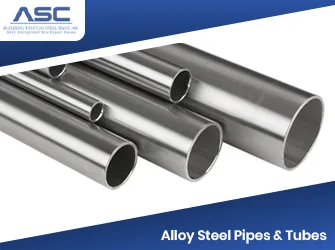
Amardeep Steel Centre LLP is a Mumbai-based manufacturer, supplier, and exporter of Alloy Steel Pipes & Tubes, serving customers across India and internationally. As an established alloy steel pipe manufacturer in India, we supply both seamless alloy steel pipe and alloy steel welded pipes & tubes in the full ASTM A335 P-grade and ASTM A213 T-grade range, from half-inch NB up to 26-inch NB, with wall thicknesses from 0.3 mm to 50 mm.
Alloy steel seamless pipe is produced from a single solid billet with no weld seam, giving it roughly 20% higher working pressure capability than welded pipe of the same grade and size, which is why it is the default choice for high-pressure boiler, superheater, and process piping. Alloy steel welded pipe, formed by rolling and welding plate or strip, offers a more economical option, particularly in larger diameters, where the absence of a weld seam is not a critical design requirement.
Whether your project calls for a single trial length or full project tonnage, we supply alloy steel pipe and tube as an alloy steel pipe supplier with material traceability, mill test certificates and third-party inspection, backed by ready stock in Mumbai and a global mill-sourcing network.
What Are Alloy Steel Pipes & Tubes?
Alloy steel is carbon steel to which controlled amounts of alloying elements, chiefly chromium and molybdenum, sometimes with nickel, manganese, vanadium, or titanium, have been added during melting. These elements change how the steel behaves at high temperature and under load, which is the entire reason alloy steel pipe exists as a separate product category from plain carbon steel pipe.
Alloy steel pipe material is classified by alloying percentage:
- Low alloy steel pipe — total alloying elements below 5% (e.g., P1, P2, P11, P12)
- High alloy steel pipe — total alloying elements between roughly 5% and 50% (e.g., P5, P9, P91, P92)
Compared with carbon steel pipe, alloy steel pipe offers better resistance to oxidation and creep at elevated temperature, while remaining more cost-effective than stainless steel for applications where extreme corrosion resistance isn't the primary requirement. This combination of moderate cost, high-temperature strength, and weldability is what makes alloy steel pipe and alloy steel tube the standard choice for boiler and high-temperature process piping across the power, oil & gas, and petrochemical sectors.
Alloy Steel Pipe Material Overview
The performance of any alloy steel pipe material comes down to how chromium and molybdenum are balanced in the chemistry:
- Chromium (Cr) improves oxidation resistance and hardenability. Grades move from roughly 0.5% Cr (P2) up to 9% Cr (P91/P92) as design temperature increases.
- Molybdenum (Mo) improves creep strength, the ability of steel to resist slow deformation under sustained load at high temperature, which is why every P-grade and T-grade alloy steel pipe and tube contains molybdenum.
- Vanadium and Nitrogen (added in P91/P92) further raise creep strength, which is why these creep-strength-enhanced ferritic (CSEF) grades can run thinner walls at the same pressure/temperature rating as older grades like P22, reducing weight and welding time on large boiler projects.
For comparison, buyers evaluating material options alongside alloy steel often also review carbon steel pipes & tubes for lower-temperature, lower-cost service, or stainless steel pipes & tubes and duplex steel pipes & tubes where corrosion resistance, not high-temperature strength, is the dominant requirement.
Types of Alloy Steel Pipes & Tubes
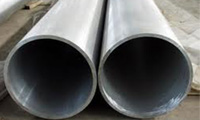
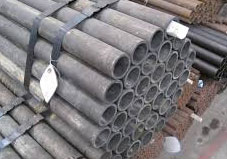
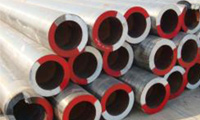
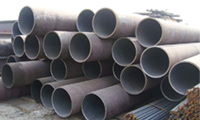
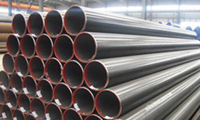
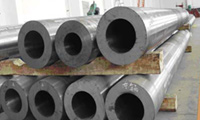
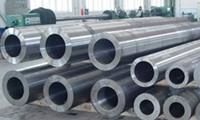
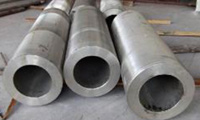
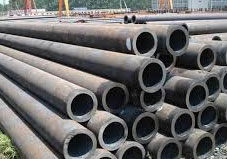
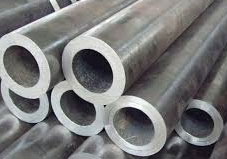
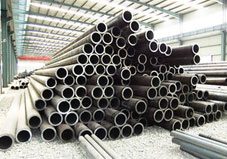
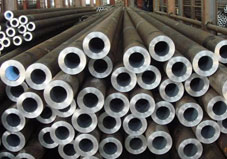
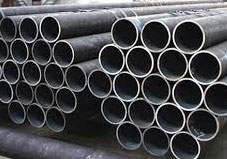
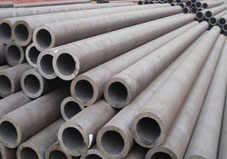
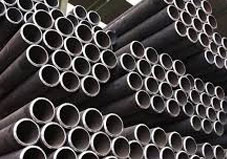
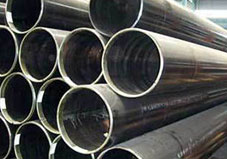
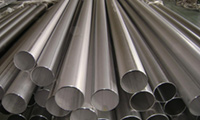
Alloy steel pipes and tubes are specialized components made from steel alloyed with elements like chromium and molybdenum, enhancing their strength, corrosion resistance, and high-temperature performance. They are categorized by manufacturing process (seamless or welded) and specific grades like ASTM A335 P-grades for pipes and ASTM A213 T-grades for tubes.
Alloy Steel Pipe Specifications
| Parameter | Specification |
|---|---|
| Specification | ASTM A335 / ASME SA335 (pipes), ASTM A213 / ASME SA213 (tubes), ASTM A519 (mechanical tubing) |
| Dimensions | ASTM, ASME, API, EN, DIN, JIS |
| Pipe Size | NB 1/8″ to 30″ |
| Tube Size | 1/2″ OD to 5″ OD (custom diameters available) |
| Outer Diameter | 6 mm to 2500 mm; WT 1 mm to 200 mm |
| Schedule | SCH20, SCH30, SCH40, STD, SCH60, SCH80, XS, SCH120, SCH140, SCH160, XXS |
| Grade | ASTM A335 P1, P2, P5, P9, P11, P12, P15, P21, P22, P91, P92; ASTM A213 T1, T2, T5, T5b, T5c, T9, T11, T12, T22, T23, T91, T92 |
| Length | Up to 13,500 mm; Single Random, Double Random & Cut Length |
| Type | Seamless / ERW / Welded / Fabricated / LSAW |
| Form | Round, Square, Rectangular, Hydraulic |
| End Finish | Plain End, Beveled End, Threaded |
| Heat Treatment | Normalized & Tempered, Full Annealed (grade-dependent — see Heat Treatment section) |
Alloy Steel Pipe Grades — P-Grade & T-Grade Chemical Composition
| Grade | UNS | C max | Mn % | Cr % | Mo % | P max | S max | Si % |
|---|---|---|---|---|---|---|---|---|
| P1 / T1 | K11522 | 0.10–0.20 | 0.30–0.80 | — | 0.44–0.65 | 0.025 | 0.025 | 0.10–0.50 |
| P2 / T2 | K11547 | 0.10–0.20 | 0.30–0.61 | 0.50–0.81 | 0.44–0.65 | 0.025 | 0.025 | 0.10–0.30 |
| P5 / T5 | K41545 | 0.15 | 0.30–0.60 | 4.00–6.00 | 0.44–0.65 | 0.025 | 0.025 | 0.50 |
| P5b / T5b | K51545 | 0.15 | 0.30–0.60 | 4.00–6.00 | 0.44–0.65 | 0.025 | 0.025 | 1.00–2.00 |
| P5c / T5c | K41245 | 0.12 | 0.30–0.60 | 4.00–6.00 | 0.44–0.65 | 0.025 | 0.025 | 0.50 |
| P9 / T9 | S50400 | 0.15 | 0.30–0.60 | 8.00–10.00 | 0.44–0.65 | 0.025 | 0.025 | 0.50–1.00 |
| P11 / T11 | K11597 | 0.05–0.15 | 0.30–0.61 | 1.00–1.50 | 0.44–0.65 | 0.025 | 0.025 | 0.50–1.00 |
| P12 / T12 | K11562 | 0.05–0.15 | 0.30–0.60 | 0.80–1.25 | 0.44–0.65 | 0.025 | 0.025 | 0.50 |
| P22 / T22 | K21590 | 0.05–0.15 | 0.30–0.60 | 1.90–2.60 | 0.87–1.13 | 0.025 | 0.025 | 0.50 |
| P91 / T91 | K91560 | 0.08–0.12 | 0.30–0.60 | 8.00–9.50 | 0.85–1.05 | 0.020 | 0.010 | 0.20–0.50 |
| P92 / T92 | K92460 | 0.07–0.13 | 0.30–0.60 | 8.50–9.50 | 0.30–0.60 | 0.020 | 0.010 | 0.50 |
ASTM Standards Covered
| Standard | Scope |
|---|---|
| ASTM A335 / ASME SA335 | Seamless ferritic alloy steel pipe for high-temperature service (P-grades) |
| ASTM A213 / ASME SA213 | Seamless ferritic and austenitic alloy steel boiler, superheater & heat exchanger tubes (T-grades) |
| ASTM A519 | Seamless carbon and alloy steel mechanical tubing, used for structural and mechanical (non-pressure) applications |
| ASTM A691 | Electric-fusion-welded (EFW) alloy steel pipe for high-pressure service at high temperature |
| ASTM A234 / ASME SA234 | Buttweld fittings in alloy steel grades matching A335/A213 chemistry |
Standards Cross-Reference
| ASTM/ASME (USA) | EN (Europe) | DIN (Germany) | JIS (Japan) | Approx. Grade Match |
|---|---|---|---|---|
| A335 P11 / A213 T11 | EN 10216-2 13CrMo4-5 | DIN 17175 13CrMo44 | JIS G3462 STBA22 | 1.25Cr-0.5Mo |
| A335 P22 / A213 T22 | EN 10216-2 10CrMo9-10 | DIN 17175 10CrMo910 | JIS G3462 STBA24 | 2.25Cr-1Mo |
| A335 P91 / A213 T91 | EN 10216-2 X10CrMoVNb9-1 | — | JIS G3462 STBA28 (near) | 9Cr-1Mo-V (CSEF) |
| A335 P9 / A213 T9 | EN 10216-2 X11CrMo9-1 | DIN 17175 X20CrMoV121 (near) | JIS G3462 STBA23 | 9Cr-1Mo |
Grade matches are approximate and intended for cross-reference guidance; always verify exact chemistry and mechanical requirements against the applicable standard for your project specification.
Seamless vs Welded Alloy Steel Pipes & Tubes
| Feature | Seamless Alloy Steel Pipe | Alloy Steel Welded Pipe & Tube |
|---|---|---|
| Manufacturing | Pierced and rolled/drawn from a solid billet | Plate or strip rolled into a cylinder and welded along the seam (ERW / EFW / SAW) |
| Working Pressure | Roughly 20% higher than welded pipe of equivalent grade and size | Lower than seamless, adequate for most non-critical pressure service |
| Structural Uniformity | Fully homogeneous, no weld seam | Weld seam present; quality depends on welding process and inspection |
| Typical Cost | Higher | More economical, especially in larger diameters |
| Best Suited For | High-pressure boiler, superheater, drilling, and critical process piping | Larger-diameter structural and process piping where seam integrity is well-controlled and validated |
Seamless pipes & tubes and ERW / welded pipes are both manufactured to the same chemical and mechanical requirements within a given grade — the choice between them is a function of pressure rating, size, and project budget rather than chemistry.
Alloy Steel Welded Pipe & Tube Processes
- ERW (Electric Resistance Welding) — high-frequency current fuses the seam as the strip is rolled into shape; economical, suited to small-to-mid diameters.
- EFW (Electric Fusion Welding) — a filler-metal arc weld typically used per ASTM A691 for high-pressure, high-temperature alloy steel pipe.
- SAW (Submerged Arc Welding) — used for larger-diameter alloy steel pipe where a heavier, fully fused weld bead is required.
Alloy Steel Pipe Dimensions, Tolerances & Schedules
Pipe OD Tolerance (ASTM A530 / ASTM A335)
| NPS Range | Outside Diameter Tolerance |
|---|---|
| 1/8″ ≤ OD ≤ 1-1/2″ | ± 0.40 mm |
| 1-1/2″ < OD ≤ 4″ | ± 0.79 mm |
| 4″ < OD ≤ 8″ | +1.59 / −0.79 mm |
| 8″ < OD ≤ 12″ | +2.38 / −0.79 mm |
| OD > 12″ | ± 1% |
Tube OD & Wall Thickness Tolerance (ASTM A213)
| OD Range | OD Tolerance | Wall Thickness Tolerance |
|---|---|---|
| Up to 1-1/2″ OD | ± 0.13 mm | ± 10% of nominal WT |
| 1-1/2″ to 3″ OD | ± 0.20 mm | ± 10% of nominal WT |
| Above 3″ OD | ± 0.40 mm | ± 10% of nominal WT |
Tube tolerances vary by manufacturing condition (cold drawn vs hot finished) — confirm exact tolerance for your specific size and condition at the time of order.
Schedule / Wall Thickness Designation
Alloy steel pipe wall thickness is specified by schedule: SCH20, SCH30, SCH40 (STD), SCH60, SCH80 (XS), SCH120, SCH140, SCH160, and XXS, with custom and project-specific wall thicknesses available up to 50 mm and beyond on request. Use our Steel Weight Calculator to estimate pipe weight by grade, schedule, and length when budgeting an order.
Manufacturing Process of Alloy Steel Pipes and Tubes
Alloy Steel Seamless Pipes & Tubes are manufactured by piercing a solid, high-quality alloy steel billet and rolling or drawing it to final dimensions, producing a fully homogeneous structure with no weld seam. This is the preferred route for high-pressure alloy steel seamless pipe applications and other critical services where seam-free integrity is essential for safety and reliability.
Welded Alloy Steel Pipes & Tubes are produced by forming flat alloy steel strip or plate into a cylindrical shape and joining the seam using ERW, EFW, or SAW welding methods, producing strong, consistent welds suited to larger-diameter and less pressure-critical runs.
After forming, pipes and tubes are heat treated (normalized and tempered, or fully annealed, depending on grade — see table below) to develop the final mechanical properties, then straightened, cut to length, end-finished (plain, beveled, or threaded), and inspected before dispatch.
Heat Treatment Parameters by Grade
| Grade | Heat Treatment | Normalizing Range °C | Tempering / Annealing Range °C |
|---|---|---|---|
| P1 / T1 | Normalize & Temper; Full Anneal | 870–955 | 620–730 |
| P2 / T2 | Normalize & Temper; Full Anneal | 900–980 | 620–730 |
| P5 / T5 | Normalize & Temper; Full Anneal | 900 | 675 |
| P9 / T9 | Normalize & Temper; Full Anneal | 900 | 675 |
| P11 / T11 | Normalize & Temper; Full Anneal | 900 | 650–760 |
| P12 / T12 | Normalize & Temper; Full Anneal | 900 | 650–760 |
| P22 / T22 | Normalize & Temper; Full Anneal | 900 | 675–760 |
| P91 / T91 (CSEF) | Normalize & Temper | 1040–1080 | 730–800 (min. 730) |
| P92 / T92 (CSEF) | Normalize & Temper | 1040–1100 | 730–810 (min. 730) |
Testing & Inspection
Every batch of alloy steel pipe and tube is tested before dispatch. Tests carried out include:
- Chemical analysis (spectrometric) to confirm grade composition
- Mechanical testing — tensile strength, yield strength, elongation
- Hydrostatic testing to confirm pressure integrity
- Ultrasonic testing (UT) for internal flaw detection
- Eddy current testing (tubes) for surface and near-surface defect detection
- PMI (Positive Material Identification) to verify alloy chemistry on individual pieces
- Flattening / flaring test (tubes) to confirm ductility
- Radiography (RT), where specified, on welded pipe seams
- Visual and dimensional inspection against the applicable tolerance table
Third-party inspection through agencies such as SGS, Bureau Veritas, TÜV, Lloyd's Register, or DNV can be arranged on request for projects with contractual inspection requirements. Every shipment is accompanied by an EN 10204 3.1 mill test certificate, and an IBR Form III-D certificate is provided for alloy steel boiler pipes and tubes supplied for use under Indian Boiler Regulations.
Applications of Alloy Steel Pipes & Tubes
| Application | Typical Grade(s) |
|---|---|
| Main steam lines, headers (power plants) | P11, P22, P91, P92 |
| Superheater & reheater tubes | T11, T22, T91, T92 |
| Boiler feedwater heaters | P1, P2, P11, P12 |
| Refinery process piping (sulfidation-resistant) | P5, P9 |
| Heat exchanger tubes | T1, T2, T5, T11, T22 |
| Drill pipe / downhole equipment | P5, P9, custom OCTG grades |
| Hydraulic systems, heavy machinery | P1, P2, P11 |
| Structural and mechanical tubing | ASTM A519 grades |
Downstream of pipe selection, most projects also require alloy steel buttweld fittings, alloy steel forged fittings, and alloy steel flanges in matching grades to complete the piping system — all available alongside the pipe and tube range covered on this page.
Industries Served
- Power Generation — main steam lines, superheater/reheater tubes, boiler components, and feedwater heaters in fossil fuel, nuclear, and combined-cycle plants; see also our boiler tubes & pipes range
- Oil & Gas — OCTG, refinery process piping, sour-gas transportation pipelines, downhole equipment
- Petrochemical & Chemical Processing — reactor tubes, furnace components, heat exchanger tubes, high-temperature process piping
- Automotive & Aerospace — structural components, engine parts, exhaust systems
- Heavy Machinery & Construction — hydraulic systems, structural members, wear-resistant components
- Shipbuilding & Marine — high-pressure piping systems exposed to corrosive marine environments
Alloy Steel Pipe Price
Alloy steel pipe price per kg are not fixed figures, they move with raw material indices and depend on several order-specific factors:
Because of this volatility, we quote alloy steel pipe and tube against current mill prices rather than publishing a fixed online rate. Use our Steel Weight Calculator to estimate the weight of your required size and grade, then request a quote for today's price.
Get Today's Alloy Steel Pipe PriceWhy Choose Amardeep Steel Centre for Alloy Steel Pipes & Tubes?
As an established alloy steel pipe manufacturer in India and alloy steel pipe supplier, Amardeep Steel Centre LLP offers:
- Full Grade & Form Range — ASTM A335 P1 through P92, ASTM A213 T1 through T92, and ASTM A519 mechanical tubing, in seamless and welded (ERW/EFW/SAW) construction, round, square, rectangular, and hydraulic forms.
- Documented Quality — ISO 9001 certified quality management, with EN 10204 3.1 mill test certificates issued for every shipment and IBR Form III-D certification available for boiler-grade alloy steel pipe and tube.
- Material Traceability — every length is traceable to its original heat number, from mill certificate through to the finished pipe or tube delivered to site.
- Independent Inspection on Request — third-party inspection through SGS, Bureau Veritas, TÜV, Lloyd's Register, or DNV can be arranged for projects with contractual inspection requirements.
- Ready Stock in Mumbai — common P-grade and T-grade sizes held in stock for immediate dispatch, alongside the ability to source project-tonnage quantities through our mill network.
- Global Export Capability — complete export documentation (commercial invoice, packing list, certificate of origin, MTC, and IBR certificate where applicable) prepared for shipments worldwide.
- Technical & Customization Support — custom-cut lengths, special end finishes, and grade-selection guidance from a team experienced in supplying alloy steel pipe and tube for power, oil & gas, and petrochemical projects.
Export Capabilities
Amardeep Steel Centre LLP exports Alloy Steel Pipes & Tubes to customers across the Middle East, Southeast Asia, Africa, Europe, and the Americas, sourcing from Indian, European, Japanese, and Korean mills to ensure consistent grade availability. Each export shipment is supported by a complete document set — commercial invoice, packing list, certificate of origin, EN 10204 3.1 mill test certificate, and IBR Form III-D certification where the application requires it — to support customs clearance and project documentation requirements at the destination.
Frequently Asked Questions — Alloy Steel Pipes & Tubes
What is alloy steel pipe?
Alloy steel pipe is a steel pipe to which elements such as chromium, molybdenum, nickel, or manganese have been added in controlled amounts to improve strength, high-temperature performance, and corrosion resistance compared with plain carbon steel pipe. Low alloy steel pipe contains less than 5% total alloying elements, while high alloy steel pipe contains roughly 5% to 50%. Common grades include ASTM A335 (P1 to P92) for pipes and ASTM A213 (T1 to T92) for tubes.
What is the difference between alloy steel pipe and carbon steel pipe?
Carbon steel pipe relies mainly on carbon content for strength and has limited resistance to high temperature and corrosion. Alloy steel pipe contains added elements like chromium and molybdenum that improve creep strength at elevated temperatures, oxidation resistance, and hardenability, making it the preferred choice for boiler, superheater, and high-temperature process piping where carbon steel pipe would not perform reliably.
What is the difference between seamless and welded alloy steel pipe?
Seamless alloy steel pipe is made by piercing and rolling a solid billet, giving it a homogeneous structure with no weld seam and roughly 20% higher working pressure capability. Welded alloy steel pipe is formed by rolling a plate or strip into a cylindrical shape and welding the seam using ERW, EFW, or SAW processes. Welded pipe is generally more economical, especially in larger diameters, while seamless pipe is preferred for higher-pressure and more critical services.
Which alloy steel pipe grade is used in boilers?
ASTM A335 grades P11, P12, P22, P91, and P92 are commonly used for boiler header, main steam, and high-temperature piping, while ASTM A213 grades T11, T22, T91, and T92 are used for superheater and reheater tubes. Grade selection depends on the design temperature and pressure: P11/P12 suit moderate temperatures, P22 suits higher temperatures, and the P91/P92 creep-strength-enhanced grades are used for the most demanding high-temperature, high-pressure boiler applications.
What is P91 alloy steel pipe used for?
ASTM A335 P91 is a 9% chromium, 1% molybdenum creep-strength-enhanced ferritic (CSEF) alloy steel pipe grade used in ultra-high-temperature and high-pressure power plant piping, including main steam lines and headers in supercritical and ultra-supercritical boilers, where it offers significantly better creep strength than older P11/P22 grades at similar wall thickness.
What standards apply to alloy steel pipes and tubes?
The main standards are ASTM A335 / ASME SA335 for seamless ferritic alloy steel pipe, ASTM A213 / ASME SA213 for seamless ferritic and austenitic alloy steel tubes, and ASTM A519 for seamless carbon and alloy mechanical tubing. Equivalent standards in other systems include EN 10216-2 (Europe), DIN 17175, and JIS G3462, which are referenced for cross-comparison when supplying to international projects.
Who are the leading alloy steel pipe manufacturers in India?
India has several established alloy steel pipe manufacturers and stockists, particularly concentrated around Mumbai, supplying ASTM A335 and A213 grades to the power, oil & gas, and petrochemical sectors. Amardeep Steel Centre LLP, based in Mumbai, manufactures and supplies alloy steel pipes and tubes in seamless and welded forms, with material traceability, mill test certificates, and export documentation for both domestic and international buyers.
What affects the price of alloy steel pipe per kg?
Alloy steel pipe price per kg is driven by grade and alloy content (higher chromium-molybdenum grades like P91/P92 cost more than P11/P12), manufacturing process (seamless commands a premium over welded), outer diameter and wall thickness, length and cutting requirements, heat treatment condition, the level of testing and certification requested (such as third-party inspection or IBR certification), and prevailing raw material and freight costs, which change frequently. Because of this volatility, alloy steel pipe is quoted against current mill prices rather than published as a fixed online rate.
What is the difference between ASTM A335 and ASTM A213?
ASTM A335 covers seamless ferritic alloy steel pipe (P-grades) intended for high-temperature service such as boiler headers and main steam lines. ASTM A213 covers seamless ferritic and austenitic alloy steel tubes (T-grades) intended for boiler, superheater, and heat exchanger applications. Pipes and tubes under these standards share similar alloy chemistries (for example, P11 and T11 are metallurgically equivalent) but differ in dimensional standards and typical end use — pipes for transport and structural piping runs, tubes for heat transfer applications.
Is alloy steel pipe corrosion resistant?
Alloy steel pipe offers better corrosion and oxidation resistance than plain carbon steel pipe because of its chromium and molybdenum content, but it is not as corrosion resistant as stainless steel, which contains significantly higher chromium levels. Alloy steel pipe is primarily selected for high-temperature strength and moderate corrosion resistance rather than for severe corrosive or chemical-exposure environments, where stainless or duplex steel pipe would typically be specified instead.
What forms are alloy steel welded pipes and tubes available in?
Alloy steel welded pipes and tubes are supplied using ERW (Electric Resistance Welding), EFW (Electric Fusion Welding), and SAW (Submerged Arc Welding) processes, and are available in round, square, rectangular, and hydraulic forms, with plain, beveled, or threaded ends, in single random, double random, or custom cut lengths.
Get a Competitive Quote for Alloy Steel Pipes & Tubes
Amardeep Steel Centre supplies Alloy Steel Pipes & Tubes in seamless and welded forms with complete documentation including EN 10204 3.1 Mill Test Certificates, IBR Form III-D, material traceability, and third-party inspection on request. Ready stock available in Mumbai with worldwide export capability. We stock ASTM A335 pipes, ASTM A213 tubes, ASTM A519 tubing, chrome moly pipes, and alloy steel boiler tubes from leading Indian, Japanese, Korean, and European mills.
