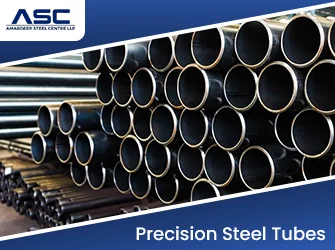
Seamless Precision Steel Tube Supplier & Exporter in India
EN 10305-1 • DIN 2391 • EN 10305-3 • SAE J524 • ASTM A519
A precision steel tube is judged by what it does not do. It does not leak past a seal, wobble in a bearing or vary in wall thickness along a hydraulic line. Getting that consistency takes more than ordinary pipe-making. The tube is first formed, then cold drawn or cold rolled through a die and over a mandrel. That final cold pass brings the outside diameter, inside diameter and wall within tight limits and leaves a smooth, bright surface.
The last heat treatment, known as the delivery condition, then sets the balance between strength and formability. A hard tube suits machined parts, while a normalized tube bends, flares and welds without cracking. That is why precision steel tubes run through hydraulic systems, shock absorbers, steering columns, fuel lines and machine tools.
Amardeep Steel Centre supplies precision steel tubes to EN 10305-1, DIN 2391, EN 10305-3, SAE J524 and ASTM A519, in every standard delivery condition. Every order ships with an EN 10204 3.1 mill test certificate.
EN 10305-1 Seamless Precision Steel Tubes
EN 10305-1 is the European standard for seamless cold-drawn precision tube. It replaced DIN 2391.
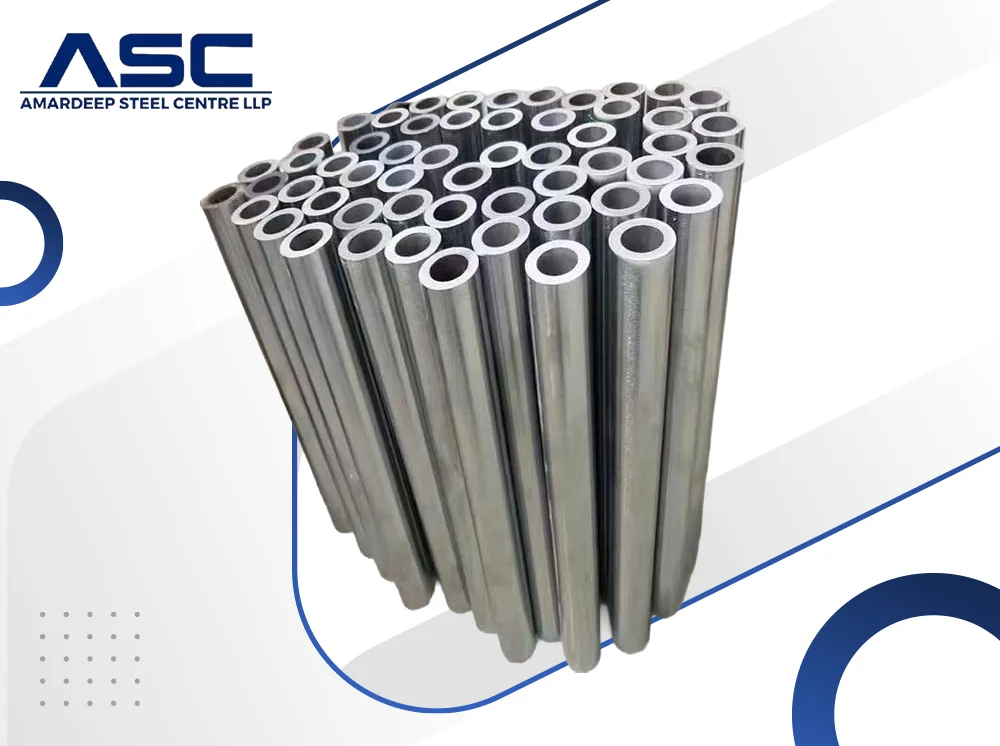
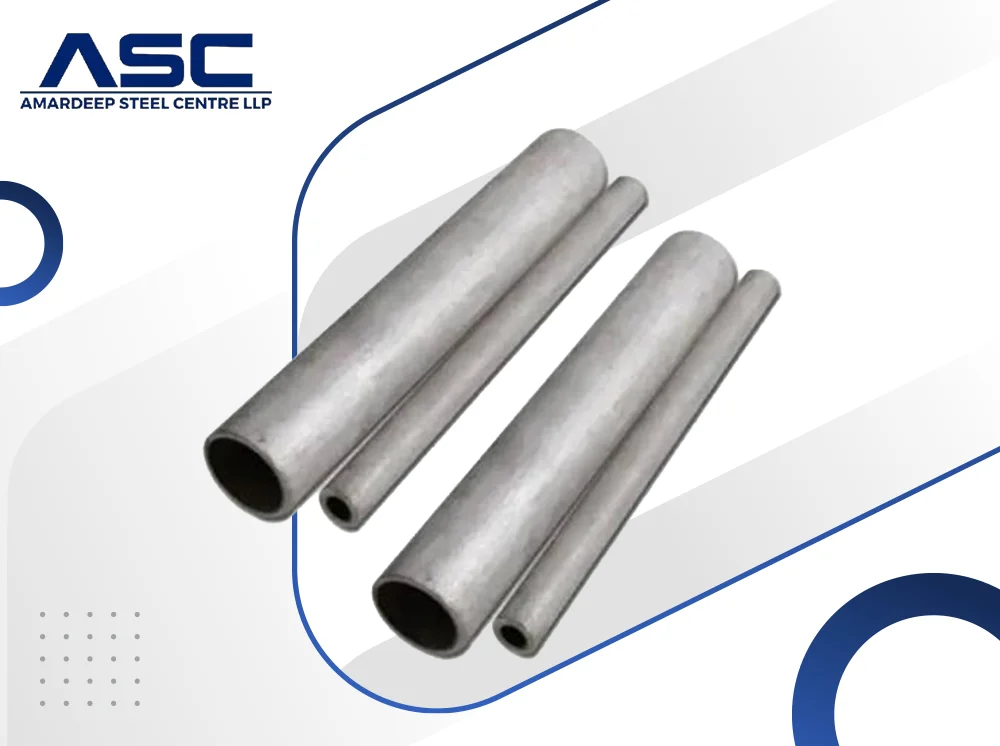
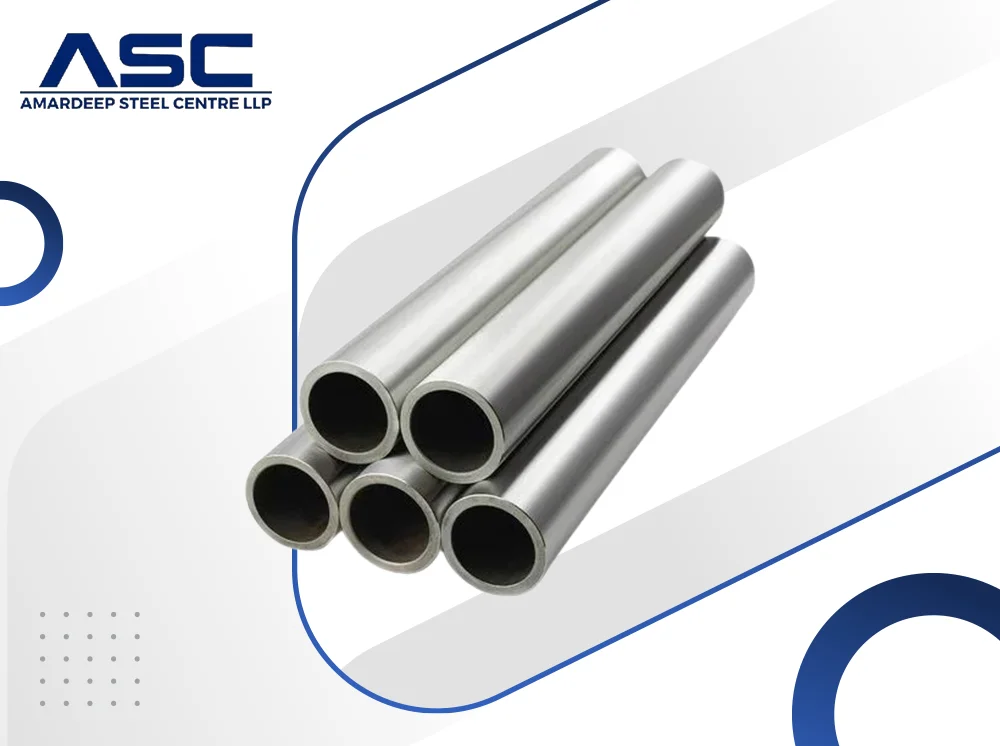
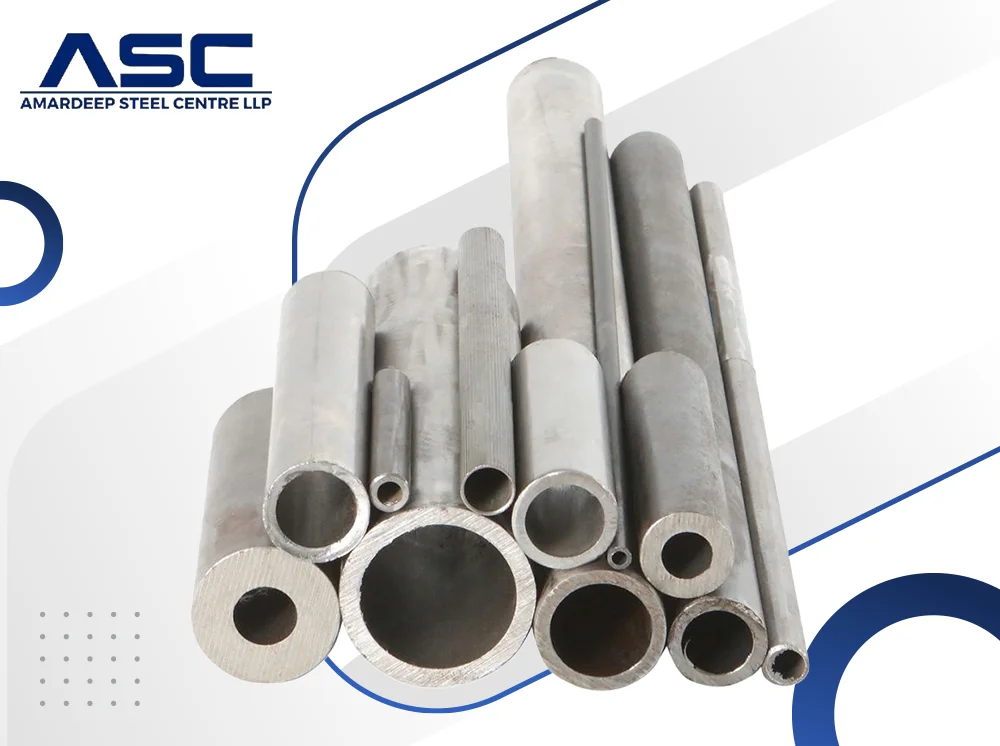
Technical Specifications of Precision Steel Tubes
| Parameter | Details |
|---|---|
|
Outside diameter |
6.00 mm to 42.00 mm |
|
Wall thickness |
0.80 mm to 5.00 mm |
|
Length |
As per customer requirement |
|
Surface protection |
Zinc plated (yellow, blue or white passivation) and phosphating |
|
Delivery conditions |
BK, BKW, BKS, GBK, NBK (EN: +C, +LC, +SR, +A, +N) |
|
Standards |
ISO, ASTM, DIN, EN, JIS, IS, SAE |
Specifications / Grades of Precision Steel Tubes
| Standard | Grades |
|---|---|
|
EN 10305-1 / EN 10305-4 |
E215, E235, E255, E355 |
|
EN 10216-2 |
P235GH |
|
DIN 2391 |
St30Al, St35, St37.4, St45, St52 |
|
JIS G3445 (STKM) |
STKM 11A, 12, 13, 14 (A, B, C), 15, 16 (A, C) |
|
IS 3074 |
CDS-1, CDS-2, CDS-3, CDS-4, CDS-5 |
|
SAE |
J524 |
Chemical Composition of EN 10305-1 Grades (%)
| Grade | C max | Si max | Mn max | P max | S max |
|---|---|---|---|---|---|
|
E155 |
0.11 |
0.35 |
0.70 |
0.025 |
0.025 |
|
E195 |
0.15 |
0.35 |
0.70 |
0.025 |
0.025 |
|
E235 |
0.17 |
0.35 |
1.20 |
0.025 |
0.025 |
|
E355 |
0.22 |
0.55 |
1.60 |
0.025 |
0.025 |
Mechanical Properties, +N Condition (minimum)
| Grade | Tensile strength (MPa) | Yield strength (MPa) | Elongation (%) |
|---|---|---|---|
|
E155 |
270–410 |
155 |
28 |
|
E195 |
300–440 |
195 |
28 |
|
E235 |
340–480 |
235 |
25 |
|
E355 |
490–630 |
355 |
22 |
Delivery Conditions of Precision Steel Tubes
| EN 10305-1 | DIN 2391 | Condition | Best for |
|---|---|---|---|
|
+C |
BK |
Cold finished, hard |
Machined parts needing strength |
|
+LC |
BKW |
Cold finished, soft |
Light bending and expanding |
|
+SR |
BKS |
Cold finished and stress relieved |
Machining with some forming |
|
+A |
GBK |
Annealed |
Heavy cold forming |
|
+N |
NBK |
Normalized |
Bending, flaring, welding, hydraulic lines |
Precision Tube Standards We Supply
| Standard | Type | Our page |
|---|---|---|
|
EN 10305-1 |
Seamless, cold drawn |
Grade pages above |
|
DIN 2391 |
Seamless, cold drawn (German, now EN 10305-1) |
|
|
EN 10305-3 |
Welded, cold sized |
|
|
SAE J524 |
Seamless, annealed hydraulic tubing |
|
|
SAE J525 |
Welded, cold drawn hydraulic tubing |
|
|
ASTM A519 |
Seamless carbon and alloy mechanical tubing |
|
|
ASTM A513 DOM |
Welded, drawn over mandrel |
Precision Tube vs Ordinary Steel Pipe
| Precision steel tube | Ordinary steel pipe | |
|---|---|---|
|
Final forming |
Cold drawn or cold rolled |
Hot finished |
|
Sized by |
Exact OD × wall |
Nominal bore and schedule |
|
Tolerances |
Tight on OD, ID and wall |
Wider |
|
Surface |
Smooth, bright |
Mill scale |
|
Typical use |
Hydraulics, automotive, machine parts |
Fluid conveying, structural |
Manufacturing Process of Precision Steel Tubes
Every precision steel tube goes through the same basic route. Each step either tightens the dimensions or sets the final properties.
- Hollow making. A solid steel billet is heated and pierced or extruded into a rough seamless hollow.
- Pickling. The hollow is pickled in acid to remove mill scale, then coated with a lubricant so it can be drawn cleanly.
- Cold drawing. The hollow is pulled through a die and over a mandrel at room temperature. Each pass reduces the diameter and wall, tightens tolerances and smooths the inner and outer surfaces. Several passes may be needed to reach the final size.
- Heat treatment. The tube is annealed or normalized in a controlled-atmosphere furnace. This sets the delivery condition (+C, +LC, +SR, +A or +N) and keeps the surface bright and free of scale.
- Straightening and cutting. The tube is straightened and cut to the ordered length.
- Testing and inspection. Dimensions, surface and mechanical properties are checked, with eddy current or pressure testing where the standard requires it.
- Surface protection. The tube is oiled, phosphated or zinc plated (yellow, blue or white passivation) to resist corrosion in storage and service.
Applications of Precision Steel Tubes
- Hydraulic and pneumatic lines
- Hydraulic cylinder barrels
- Automotive shock absorbers, steering columns and drive shafts
- Fuel injection, brake and lubrication lines
- Machine-tool and textile-machinery components
- Bushes, sleeves and bearing parts
- Earthmoving, agricultural and material-handling equipment
Looking for stainless steel precision tube? Read our guide to stainless steel precision tubes.
Send us the standard, grade, delivery condition, OD × wall, length and quantity for a quote.
FAQs – Precision Steel Tubes
What is a precision steel tube?
A steel tube that is cold drawn or cold rolled after forming, so its outside diameter, inside diameter and wall thickness are held to tight tolerances with a smooth, bright surface. It is used where a tube must fit, seal or slide accurately.
What is the difference between a precision tube and ordinary steel pipe?
Ordinary pipe is hot finished and sized by nominal bore and schedule. A precision tube is cold finished and sized by exact OD and wall, with much tighter tolerances and a better surface.
What is the difference between seamless and welded precision tubes?
Seamless precision tube (EN 10305-1, DIN 2391) is drawn from a pierced hollow with no weld. Welded precision tube (EN 10305-2 and 10305-3) starts as welded strip and is then cold drawn or sized. Seamless suits high-pressure hydraulics; welded is more economical for automotive and structural parts.
Which grade is used for hydraulic cylinders?
EN 10305-1 E355 (DIN 2391 St52) in the normalized +N condition is the usual choice, because it is strong and welds well.
What standards cover precision steel tubes?
EN 10305-1 (seamless cold drawn), EN 10305-2 (welded cold drawn), EN 10305-3 (welded cold sized), DIN 2391 (replaced by EN 10305-1), ASTM A519 and SAE J524 in the USA, and IS 3074 in India.
