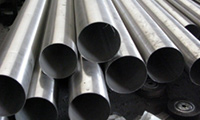
Stainless Steel 310 Pipes & Tubes Manufacturer, Supplier & Exporter in India
Amardeep Steel Centre is a Mumbai based manufacturer, stockist and exporter of stainless steel 310 pipes and tubes, supplying ASTM A312 TP310 material to furnace, kiln, heat treatment, petrochemical and power generation projects since 1982. We hold 310 seamless and 310 welded pipe and tube ex stock, produced to ASTM A312, A213, A249, A269 and A358, and dispatched to more than 40 countries with EN 10204 3.1 Mill Test Certificates.
310 is not a general-purpose grade and should not be bought as one. It costs considerably more than 304 or 316 because of its nickel content, and it earns that
premium only where sustained temperature is the governing design condition. Where the duty is corrosion rather than heat, 304 or 316 will do the same job for less. Our technical team will tell you which side of that line your application falls on before you commit to a purchase order.
Send your NPS, schedule and quantity and we will confirm price and availability the same working day. Request a quote or review our quality certifications.
What Are Stainless Steel 310 Pipes & Tubes?
Stainless steel 310 pipe is a high-chromium, high-nickel austenitic alloy built specifically for elevated-temperature service. At 24 to 26 percent chromium and 19 to 22 percent nickel it carries roughly a third more chromium and more than twice the nickel of Grade 304. The chromium forms a tenacious oxide scale that resists spalling through thermal cycles; the nickel stabilises the austenitic structure and maintains creep strength at temperatures where 304 and 316 have long since lost useful load-bearing capability.
The practical consequence is a continuous service ceiling of approximately 1150 °C in mildly cyclic conditions and around 1035 °C in severely cyclic service, against roughly 870 °C for 304. 310 also resists sulphidation and performs acceptably in moderately carburising atmospheres, which is why it appears in furnace internals, radiant tubes and heat treatment fixtures where cheaper grades scale away within months.
For a broader view of where 310 sits, see our references on types of stainless steel and stainless steel grades and properties.
SS 310 vs 310S vs 310H: Which Grade Do You Actually Need?
|
Factor |
SS 310 |
SS 310S |
SS 310H |
|---|---|---|---|
|
UNS |
S31000 |
S31008 |
S31009 |
|
Werkstoff |
1.4841 |
1.4845 |
1.4845 (H variant) |
|
Carbon content |
0.25% max |
0.08% max |
0.04 to 0.10% |
|
Sensitisation risk when welded |
Higher |
Low, the reason it exists |
Higher |
|
High-temperature creep strength |
High |
Slightly lower |
Highest, carbon controlled at the top end |
|
Continuous service |
To approx. 1150 °C |
To approx. 1150 °C |
To approx. 1150 °C |
|
Specify it when |
Static high-temperature parts, minimal welding |
Welded or thermally cycled assemblies |
Code work needing certified creep properties |
In practice: if the pipe will be welded, cycled between ambient and operating temperature, or held in the 425 to 870 C sensitisation band, specify 310S. If it is a static furnace component where creep strength governs and welding is minimal, 310 is correct. If the design is code-stamped and needs certified elevated-temperature allowable stresses, specify 310H. Related high-temperature grades: 309H, 321 and 253 MA for service beyond 1150 C.
SS 310 Temperature Performance Compared with 304, 316 and 321
|
Grade |
Cr / Ni |
Continuous service (mildly cyclic) |
Intermittent service |
Relative cost |
|---|---|---|---|---|
|
304 |
18 / 8 |
Approx. 870 °C |
Approx. 925 °C |
Baseline |
|
316 |
17 / 12 + 2 Mo |
Approx. 925 °C |
Approx. 870 °C |
Higher than 304 |
|
321 |
18 / 10 + Ti |
Approx. 900 °C |
Approx. 870 °C |
Higher than 304 |
|
309 / 309H |
23 / 13 |
Approx. 1000 °C |
Approx. 980 °C |
Below 310 |
|
310 / 310S |
25 / 20 |
Approx. 1150 °C |
Approx. 1035 °C |
Substantially higher |
|
253 MA |
21 / 11 + Ce |
Approx. 1150 °C |
Approx. 1050 °C |
Highest of this set |
Note the inversion for 316 and 321: continuous service capability exceeds intermittent capability, because thermal cycling promotes scale spalling. 310 shows the same behaviour, which is exactly why 310S exists and why a cycled application should not be specified in plain 310.
Stainless Steel 310 Pipe Specifications
|
Specification |
Details |
|---|---|
|
Pipe standards |
ASTM A312 / ASME SA312, ASTM A358 / ASME SA358 |
|
Tube standards |
ASTM A213 / SA213, ASTM A249 / SA249, ASTM A269 / SA269 |
|
Dimensions |
ASTM, ASME B36.19M, API |
|
Seamless pipe size |
1/2 inch NB to 24 inch NB |
|
ERW pipe size |
1/2 inch NB to 24 inch NB |
|
EFW pipe size |
6 inch NB to 100 inch NB |
|
Tube size range |
1/8 inch NB to 30 inch NB |
|
Schedule |
SCH 5S, 10S, 20, 30, 40S, STD, 60, 80S, XS, 120, 140, 160, XXS |
|
Type |
Seamless, ERW, welded, EFW, LSAW, fabricated |
|
Form |
Round, square, rectangular, hydraulic, hollow section, coil |
|
Length |
Single random, double random and cut length |
|
End finish |
Plain end, bevelled end, threaded |
|
Delivery condition |
Annealed and pickled, bright annealed, polished, cold drawn |
|
Documentation |
EN 10204 3.1 / 3.2 MTC, PMI, NDT and third-party inspection on request |
Chemical Composition of SS 310 and 310S Pipes & Tubes
|
Grade |
UNS |
C max |
Mn max |
Si max |
P max |
S max |
Cr |
Ni |
|---|---|---|---|---|---|---|---|---|
|
310 |
S31000 |
0.25 |
2.00 |
1.50 |
0.045 |
0.030 |
24.0 to 26.0 |
19.0 to 22.0 |
|
310S |
S31008 |
0.08 |
2.00 |
1.50 |
0.045 |
0.030 |
24.0 to 26.0 |
19.0 to 22.0 |
|
310H |
S31009 |
0.04 to 0.10 |
2.00 |
1.50 |
0.045 |
0.030 |
24.0 to 26.0 |
19.0 to 22.0 |
Values in percent. Note the silicon allowance of 1.50 percent, considerably higher than the 0.75 percent typical of 304 and 316. Silicon contributes materially to oxidation resistance at temperature and is part of why 310 outperforms the standard austenitics in furnace atmospheres.
Mechanical and Physical Properties of Stainless Steel 310 Tubes
|
Property |
Value |
|---|---|
|
Tensile strength, minimum |
515 MPa (75,000 psi) |
|
Yield strength 0.2% proof, minimum |
205 MPa (30,000 psi) |
|
Elongation in 50 mm, minimum |
40 percent |
|
Hardness maximum |
95 HRB / 217 HB |
|
Melting range |
Approximately 1400 to 1454 °C |
|
Solution annealing |
1040 to 1065 °C followed by rapid cooling |
|
Forging range |
975 to 1175 °C, annealed after forging to relieve stress |
|
Density (kg/m³) |
Elastic modulus (GPa) |
Mean CTE 0-100 °C |
Thermal cond. at 100 °C |
Thermal cond. at 500 °C |
Specific heat (J/kg·K) |
Resistivity (nΩ·m) |
|---|---|---|---|---|---|---|
|
7,750 |
200 |
15.9 µm/m·C |
14.2 W/m·K |
18.7 W/m·K |
500 |
720 |
Weight calculation note: 310 has a density of 7,750 kg per cubic metre, not the 8,000 kg per cubic metre used for 304 and 316. Every weight figure on this page is calculated at 7,750. Using the 304 density on a 310 order overstates weight by roughly 3.2 percent, which on a container load is a meaningful commercial error in either direction.
Equivalent Grades for 310 and 310S Stainless Steel Pipe
|
Grade |
UNS |
Werkstoff |
EN name |
JIS |
GOST |
Old BS |
|---|---|---|---|---|---|---|
|
SS 310 |
S31000 |
1.4841 |
X15CrNi25-20 |
SUS 310 |
20Ch25N20S2 |
310S24 |
|
SS 310S |
S31008 |
1.4845 |
X8CrNi25-21 |
SUS 310S |
20Ch23N18 |
310S16 |
SS 310 Pipe Size Chart in MM and Schedule Chart
310 stainless steel pipe dimensions follow ASME B36.19M, the same nominal bore and schedule system as every other austenitic grade. Outside diameter is fixed for a given NPS; schedule sets wall thickness.
|
NPS |
OD (mm) |
SCH 10S |
SCH 40S |
SCH 80S |
SCH 160 |
|---|---|---|---|---|---|
|
1/2" |
21.34 |
2.11 |
2.77 |
3.73 |
4.75 |
|
3/4" |
26.67 |
2.11 |
2.87 |
3.91 |
5.54 |
|
1" |
33.40 |
2.77 |
3.38 |
4.55 |
6.35 |
|
1 1/4" |
42.16 |
2.77 |
3.56 |
4.85 |
6.35 |
|
1 1/2" |
48.26 |
2.77 |
3.68 |
5.08 |
7.14 |
|
2" |
60.33 |
2.77 |
3.91 |
5.54 |
8.74 |
|
2 1/2" |
73.03 |
3.05 |
5.16 |
7.01 |
9.53 |
|
3" |
88.90 |
3.05 |
5.49 |
7.62 |
11.13 |
|
4" |
114.30 |
3.05 |
6.02 |
8.56 |
13.49 |
|
6" |
168.28 |
3.40 |
7.11 |
10.97 |
18.26 |
|
8" |
219.08 |
3.76 |
8.18 |
12.70 |
23.01 |
|
10" |
273.05 |
4.19 |
9.27 |
15.09 |
28.58 |
|
12" |
323.85 |
4.57 |
9.53 |
17.48 |
33.32 |
|
16" |
406.40 |
4.78 |
9.53 |
16.66 |
– |
|
20" |
508.00 |
5.54 |
9.53 |
20.62 |
– |
|
24" |
609.60 |
6.35 |
9.53 |
24.61 |
– |
Wall thickness in mm. Sizing conventions are covered in our guide to steel pipe sizes and nominal pipe size and the full range is in our pipe dimension chart.
SS 310 Pipe Weight Chart: Weight Per Metre by Schedule
|
NPS |
OD (mm) |
SCH 10S kg/m |
SCH 40S kg/m |
SCH 80S kg/m |
|---|---|---|---|---|
|
1/2" |
21.34 |
0.99 |
1.25 |
1.62 |
|
3/4" |
26.67 |
1.26 |
1.66 |
2.20 |
|
1" |
33.40 |
2.06 |
2.46 |
3.24 |
|
1 1/4" |
42.16 |
2.65 |
3.33 |
4.44 |
|
1 1/2" |
48.26 |
3.06 |
3.98 |
5.41 |
|
2" |
60.33 |
3.85 |
5.35 |
7.48 |
|
2 1/2" |
73.03 |
5.18 |
8.50 |
11.42 |
|
3" |
88.90 |
6.35 |
11.11 |
15.27 |
|
4" |
114.30 |
8.24 |
15.81 |
22.32 |
|
6" |
168.28 |
13.60 |
27.79 |
42.56 |
|
8" |
219.08 |
19.43 |
41.85 |
64.64 |
|
10" |
273.05 |
27.03 |
59.25 |
96.01 |
|
12" |
323.85 |
35.11 |
72.29 |
132.08 |
For a size or schedule not listed, use our steel weight calculator and set density to 7,750 kg/m³. Schedule selection is explained in our guide to the difference between Schedule 40 and Schedule 80 pipe.
Types of SS 310 Pipes and Tubes We Supply
- SS 310 seamless pipe and tube: extruded or drawn from solid billet with no weld seam, giving uniform wall thickness and the highest integrity for critical high-temperature service. See seamless pipes and tubes.
- SS 310 welded and ERW pipe: formed from strip or plate and seam welded, then solution annealed. More economical for larger bores and non-critical duty. See welded pipes and tubes and ERW pipe.
- SS 310 EFW and LSAW pipe: electric fusion welded for 6 inch to 100 inch NB per ASTM A358, used for furnace ducting and large-bore process lines.
- SS 310 seamless and welded tube to ASTM A213, A249 and A269, including heat exchanger tubes and radiant tube for furnace service.
- Square, rectangular and hollow sections for furnace framework and support structures. See square tube and rectangular tube.
- Fabricated spools, U-tubes and coils, plus 310 refractory anchors for kiln and furnace lining work.
SS 310 Seamless vs Welded Pipe
|
Factor |
Seamless SS 310 |
Welded / EFW SS 310 |
|---|---|---|
|
Construction |
Drawn or extruded from solid billet, no seam |
Strip or plate rolled and seam welded, then annealed |
|
Size range |
1/2" to 24" NB |
1/2" to 24" NB ERW, 6" to 100" NB EFW |
|
Thermal cycling |
No seam to act as an initiation site |
Weld and HAZ are the first place scale spalling starts |
|
Cost |
Higher, and the gap is wider in 310 than in 304 |
More economical, especially above 6" NB |
|
Typical use |
Radiant tubes, furnace internals, pressure parts |
Ducting, large-bore transfer lines, structural |
Where the assembly is welded, consider 310S rather than 310 regardless of construction route. See our article on the difference between seamless and welded pipe.
Testing, Inspection and Certification
- Chemical analysis by spectrometer and Positive Material Identification, with particular attention to the carbon ceiling that distinguishes 310 from 310S
- Mechanical testing: tensile, yield, elongation and hardness per heat and lot
- Intergranular corrosion testing to ASTM A262, the direct check on sensitisation resistance
- Hydrostatic testing and non-destructive testing by ultrasonic, radiographic and eddy current methods
- Flattening, flaring and pitting resistance tests for tube products
- Macro and micro examination, and heat treatment chart verification
- Third-party inspection by SGS, Bureau Veritas, TUV or Lloyd's Register on request
Documentation supplied includes the EN 10204 3.1 Mill Test Certificate as standard, heat treatment charts, quality assurance plan and NABL-accredited lab reports where required. See our testing capabilities and quality certifications.
Applications of Stainless Steel 310 Pipes & Tubes
- Industrial furnaces and kilns: internal linings, muffles, retorts, radiant tubes and support structures
- Heat treatment equipment: baskets, fixtures, trays and conveyor components in continuous furnaces
- Heat exchangers and boilers:heat exchanger tubes and boiler pipes in high-temperature service
- Cement and lime: preheater and kiln hood components, clinker cooler internals
- Glass manufacturing: forehearth components and high-temperature handling equipment
- Petrochemical and refining: hot gas ducting, cracking furnace components, sulphur-bearing atmospheres
- Power generation: superheater supports, ash handling and hot gas paths, plus process equipment in high-temperature duty
- Ore processing and calcining: rotary kiln internals and high-temperature material handling
310 Stainless Steel Pipe Price
SS 310 pipe price is driven overwhelmingly by nickel. At 19 to 22 percent nickel, against 8 to 10.5 percent in 304, the alloy surcharge on 310 moves roughly twice as hard with the LME nickel price. Beyond raw material, price varies with seamless versus welded construction, schedule, surface finish, order quantity, certification scope and destination freight.
Because nickel moves daily and the surcharge component is large, we do not publish a fixed 310 price list. Send your NPS, schedule, length and quantity for a same-day quotation, and we will quote both per metre and per kg so you can compare directly against any competing offer.
Stock Availability and Export
Ex stock Mumbai across 1/2 inch to 24 inch NB in SCH 10S, 40S and 80S, with larger bores and non-standard schedules manufactured to order, typically within three to five weeks depending on mill availability. Exports to the Middle East, Southeast Asia, Africa, Europe and the Americas on FOB, CIF and EXW terms, with commercial invoice, packing list, certificate of origin, Mill Test Certificate and third-party inspection certificates supplied as required. Pipes are bundled with steel strapping, fitted with plastic end caps and packed in seaworthy wooden cases, each length marked with NB, schedule, specification, grade, heat number and manufacturer's symbol.
Why Choose Amardeep Steel for SS 310 Pipes & Tubes
- Established in 1982, with more than 40 years supplying high-temperature grades to furnace, kiln and process plant projects
- Direct manufacturer and stockist, controlling quality end to end rather than reselling third-party stock
- Carbon verified by PMI on every lot, so 310 is not supplied against a 310S order or the reverse
- Ready inventory across major sizes and schedules for fast dispatch
- EN 10204 3.1 MTC with every consignment, 3.2 and third-party inspection on request
- Honest grade advice, including telling you when a cheaper grade will do the job
Related Products
SS 310S Pipes & Tubes, SS 310H Pipes & Tubes, SS 309H Pipes & Tubes, SS 310 Flanges, SS 310 Forged Fittings, SS 310 Buttweld Fittings, SS 310 Refractory Anchors, SS 304, SS 316, SS 321, SS 347, 253 MA, SS 904L, Stainless Steel Pipes & Tubes, Boiler Tubes & Pipes
Get a Competitive Quote for Stainless Steel 310 Pipes & Tubes
Amardeep Steel Centre supplies SS 310 pipe and tube in seamless, welded, ERW and EFW forms with EN 10204 3.1 Mill Test Certificates and third-party inspection on request. Ready stock in Mumbai with worldwide export capability. Send your design temperature along with the size and schedule and we will confirm whether 310, 310S or a lower-cost grade is the right specification. Request a quote or contact our Mumbai office.
Frequently Asked Questions - Stainless Steel 310 Pipes & Tubes
What is stainless steel 310 pipe?
Stainless steel 310 pipe is a high-chromium, high-nickel austenitic pipe made to ASTM A312 TP310 under UNS S31000. With 24 to 26 percent chromium and 19 to 22 percent nickel it withstands continuous service to approximately 1150 °C, well beyond the roughly 870 °C limit of Grade 304.
What is the difference between SS 310 and SS 310S pipe?
Carbon content. 310 permits up to 0.25 percent carbon for higher creep strength; 310S caps it at 0.08 percent to prevent carbide precipitation during welding and thermal cycling. Specify 310S for anything welded or repeatedly cycled through the 425 to 870 °C sensitisation range.
What is the maximum temperature for SS 310 pipe?
Approximately 1150 °C in continuous, mildly cyclic service and around 1035 °C where cycling is severe. Note the inversion: severe thermal cycling lowers the usable ceiling because it promotes oxide scale spalling. Confirm your duty cycle before specifying, not just the peak temperature.
Is SS 310 better than SS 304?
For high-temperature service, yes, decisively. For ambient corrosion duty, no. 310 costs several times more than 304 because of its nickel content and offers no advantage below roughly 870 °C. Specify 310 only when sustained temperature is the governing design condition.
What is the density of stainless steel 310?
7,750 kg per cubic metre, or 7.75 g per cubic cm. This is lower than the 8,000 kg per cubic metre used for 304 and 316, so 310 pipe weighs roughly 3 percent less per metre at the same dimensions. Use 7,750 in any 310 weight calculation.
What sizes are available in SS 310 pipe?
Seamless and ERW from 1/2 inch to 24 inch NB, EFW from 6 inch to 100 inch NB, and tube from 1/8 inch to 30 inch NB, in schedules from SCH 5S through XXS. Non-standard sizes are manufactured to order, typically in three to five weeks.
Can SS 310 pipe be welded?
Yes, by TIG, MIG and plasma processes using matching or 310 filler. However, plain 310 with up to 0.25 percent carbon is prone to sensitisation in the heat affected zone. For welded assemblies in cyclic high-temperature service, 310S is the safer specification.
Is SS 310 magnetic?
In the solution annealed condition it is austenitic and essentially non-magnetic. Heavy cold work can induce slight magnetic response, though 310 is more stable in this respect than 304 because of its higher nickel content. Slight magnetism does not indicate the wrong grade.
What is the price of SS 310 pipe per kg?
310 pricing tracks LME nickel closely because the alloy carries 19 to 22 percent nickel, roughly twice that of 304. Price also varies with construction, schedule, finish and quantity. Send your bill of materials for a same-day quotation rather than working from a published list.
Does SS 310 resist carburising and sulphidising atmospheres?
It performs well in moderately carburising atmospheres and resists sulphidation better than the standard austenitic grades, which is why it appears in furnace internals and petrochemical hot-gas service. For severely carburising duty, higher-alloy nickel grades should be evaluated instead.
